Everything I know about operations started at a Beach Cafe
A lot of people think good customer experience is about good hospitality—being warm, being friendly, going the extra mile. And while the experience I offered working at a beachside cafe in my early 20’s was all of those things, I also learned that the most effective way to create good customer experiences is through good operational systems.
It's a lesson I carried with me into the agency I founded, and it's with me today as Director of Operations at Takt.
The Cafe That Taught Me Everything
Gylly Beach Café sits on one of Cornwall's most popular beaches, in an English town with palm trees, paddle boarding, and an easy going way of life. The award winning cafe is where locals come daily after their morning swim and tourists flock for fresh seafood and sunset views.
My time at the cafe started out while I was studying art and design at the local university. I was hired as the head barista, and soon after graduating became their youngest shift supervisor to date.
I had gone from an art student, to the team lead of up to 10 people per shift. I was excited, I was brimming with ideas, and I had no idea what lessons were awaiting me…

Gylly Beach Cafe in Falmouth, England.
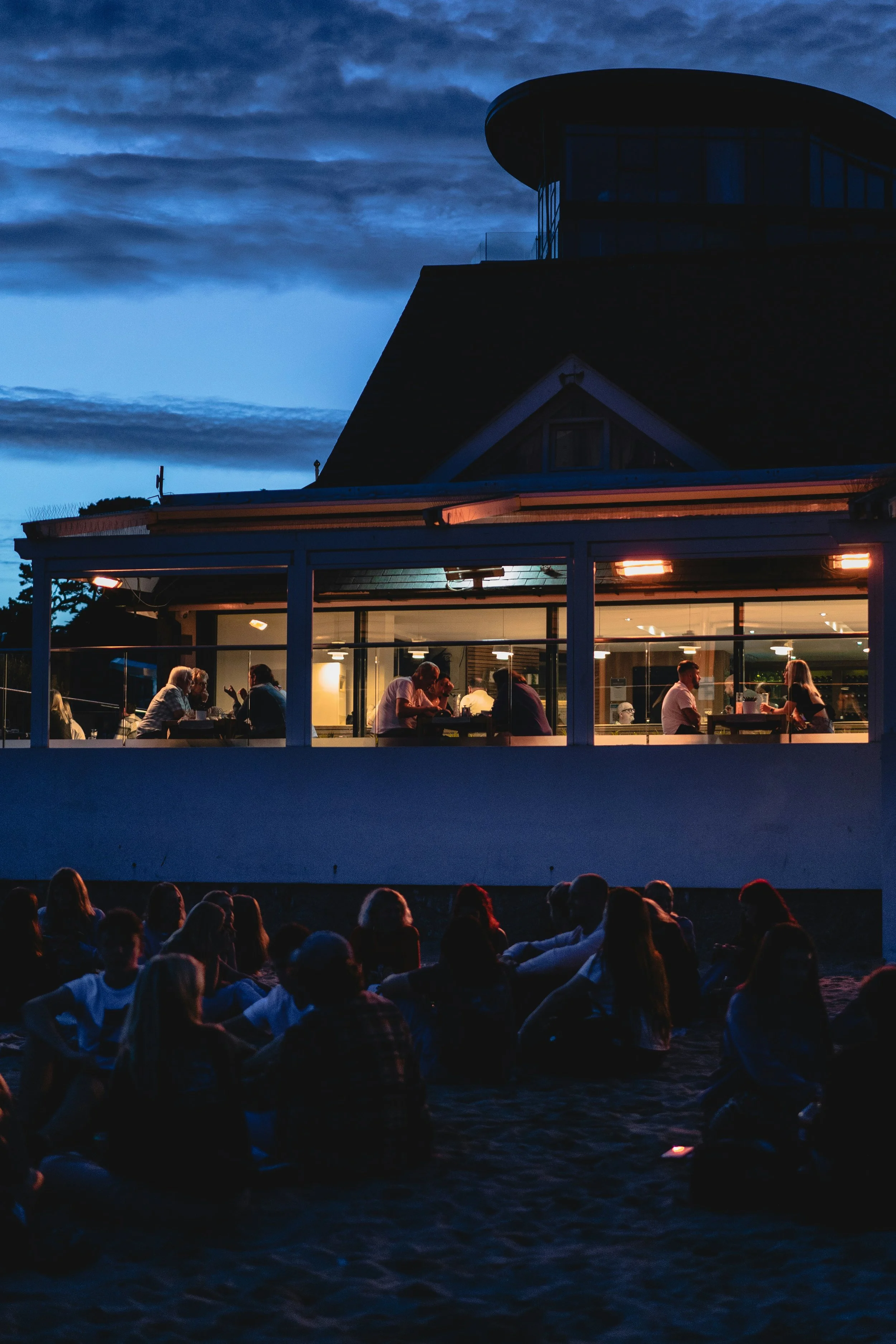
The wrap around patio at Gylly Beach Cafe.
As the head barista, I was used to manning the coffee machine that was nicely positioned between the front of house and the kitchen.
I could see over the bar and chat with customers, greet team members as they arrived for their shift, and also pop into the kitchen as needed.
In my new role as the supervisor, this vantage point allowed me to become the conductor of the flow, and the connective tissue between front and back of house.
With all of this information on a daily basis, I quickly realized I had the perfect testing ground for my very own operations laboratory. Every shift was a chance to test, refine, and see immediate feedback. When systems worked, you felt it. When they broke, customers told you within minutes.
I thrived having a team, and loved thinking through their role assignments, their skills and weakness, and how the entire flow of the cafe could impact the experience we provided our customers. The adrenaline rush of the busy cafe and my first time flexing these skills was thrilling. But those busy periods came with downsides too.
The System That Solved Our Biggest Pressure Point
A busy lunchtime rush that overwhelmed our capacity was a regular occurrence for us. I'm sure you can picture it, it's the kind of scene that plays out in cafes and restaurants everywhere. 12:30 PM hits and tourists want their hot lunch, locals want their post-swim coffee, and families are eyeing the pastries from our baker.
This is when things would fall apart, when the kitchen would get overwhelmed, the wait for hot drinks and food would rapidly increase, and everyone would get frustrated with waiting.
Our general manager would see the line out the door and rush to solve it, pushing orders through as quickly as possible. While our managers spent most of their time upstairs in the office, they’d come down to help when we were busy and I soon started to notice that it caused more chaos than they intended.
The frenetic energy of our manager rushing orders through meant that the team felt nervous and stressed. They’d drop things, we’d panic to clear the queue and take their orders faster, and while it was all in an effort to make the customers feel taken care of, I could see that it was creating the opposite effect.
What actually happened was the customers were appeased in that moment but the kitchen was suddenly slammed with 15 food orders in 2 minutes. They couldn't keep up, and the wait times for food went up and up and up, until at their worst customers would be waiting for their meal for 1, sometimes even 2 hours. Hot drinks could take as much as 30 minutes to get to our customers tables and it didn’t take long for me to realize that we were optimizing for the wrong metric.
Speed of order-taking ≠ speed and quality of service.
We needed to think about the entire system: customer wait → order placement → kitchen capacity → food delivery.
So I redesigned the flow:
From the main till, we'd take food orders and control the flow into the kitchen.
From the second till (positioned halfway down the queue) we could take drink and snack orders, or if everyone was waiting to order food, we'd pre-take their drinks orders so that they'd be ready to take with them once their food order was in.
The result: Cold drinks were ready for customers to take with them to their table, hot drinks got started earlier so customers only waited a few minutes for those, and kitchen orders staggered instead of avalanching.
Wait times went from 2 hours to 45 minutes for food. Coffee and hot drinks were on the table within 5 minutes, not 30. Customers waited a few minutes extra at the till, but had part of their order in their hands immediately.
What actually changed wasn't the speed, it was the experience of waiting.
The managers initially resisted, but when they saw the results (fewer complaints, better flow, calmer staff, fewer mistakes) they trusted the system I had implemented. They stopped coming downstairs to help during rushes because the team could operate within a system that allowed calm and order, not chaos and panic.
The numbers told the story: cutting wait times in half and having hot drinks ready by the time customers had placed their food orders delighted them. It was an unexpected perk and their surprised reactions when we place their drinks in front of them told me everything I needed to know–the new system was working.
What This Actually Taught Me
Systems remove friction and allow enjoyable experiences to unfold
I'd been working in cafes since I was 13, and one of the first things I learned as a waitress was that when you're doing your job well, customers barely notice you. Everything just works. Their water is refilled before they ask. Their food arrives at the right temperature. They never have to flag you down or wonder what's happening.
But when something breaks—when there's no sign telling them to wait to be seated, when they have to come back to the counter to ask about their drinks—they feel it immediately. The friction is obvious.
I learned the same principle in graphic design school, just with different language: user experience. Logos in the navigation link to the homepage. Navigation titles are clear, not clever. There is no point in fighting trained behaviours or creating unnecessary friction if you want to offer a quality experience.
Good systems enable good teams
When the managers stopped coming downstairs during rushes to help (read: create chaos by taking orders too fast), something shifted. The team could breathe. We made fewer mistakes. We could focus on the details that made people smile.
The systems didn't just fix our customer experience. They improved our experience too, which in turn improved the customer experience. That's a loop many people miss that plays out as capacity in agency work. Is your team overloaded and being pushed to the limit? You can expect missed details, less time for cross-discipline collaboration, and lowered quality of work.
With space to breathe, think, and talk to others, work is planned and thought through. It's more strategic and considered.
How This Became My Operating System
I didn't have an "aha moment" where I realized this would translate to design work or operations. It just became the way I naturally looked at everything.
Years later when I founded a brand and web design studio, Salt Design Co., I had this theory in mind when choosing a CRM. I knew I wanted something that would offer a frictionless experience–a system that could remove the chaos and the clutter, and make everything feel seamless for our clients.
I chose Dubsado as a comprehensive tool that handled everything in one place and was beautifully customizable. Clients were able to review their quote, sign a contract, pay their first invoice, and then immediately receive confirmation emails with 3 clicks and no input from me.
The experience was branded, digitized, and left no room for guesswork: once a client signed their contract, we had an automated flow set up to trigger informational emails, let them know what to expect, and ensure they felt taken care of.
They had information to start with while they waited, so they felt at ease and knew we had everything handled. This automated system gave us the time to be humans, to read through and appropriately action next steps, while not leaving our clients waiting and wondering.
Same principle as the dual-till system. Same principle as refilling water before they ask.
Now, in my current role as Director of Operations at Takt, I think about the same principles when looking at resource planning or process improvements. Where will the kitchen get slammed? How do I stagger the workload so quality doesn't suffer during peak periods? Where are our clients experiencing friction? What are the bottlenecks that impact the overall experience?
I've built data systems and status update processes that show me what's working, where the pressure points are, and where to adjust. I can't physically stand in one spot and see everything anymore, but my role leading our project management team serves exactly the same purpose as that strategic position at the coffee machine.
The Pattern That Connects Everything
I've now noticed the same pattern everywhere I worked: the best experiences felt effortless because someone had designed the invisible systems that made them possible.
From being a waitress at 13 learning that good service means customers barely notice you, to supervising shifts at a beach cafe where 90-minute wait times became 45 minutes because we redesigned the order flow, to running my own design agency where word-of-mouth drove seven years of growth—it's always been about the same thing.
Identify where friction lives. Design systems that remove it. Give people what they need before they ask. Make your team's job easier so they can focus on quality instead of chaos.
I used to think my path from hospitality to creative operations was unconventional. But now I know it was the perfect training ground, because the cafe taught me what most operations leaders have to learn the hard way… good customer experience lives in the invisible work, and the best systems feel effortless because someone made them intentional.
That's still what I'm building today. With different tools and bigger teams, but the same fundamental principles apply.